

1972 Bloody Sunday...
Item # 218238Sorry, but this item is no longer available. Please be in touch at info@rarenewspapers.com if you would like to be placed on a want list or are interested in a potential alternate issue.
January 31, 1972
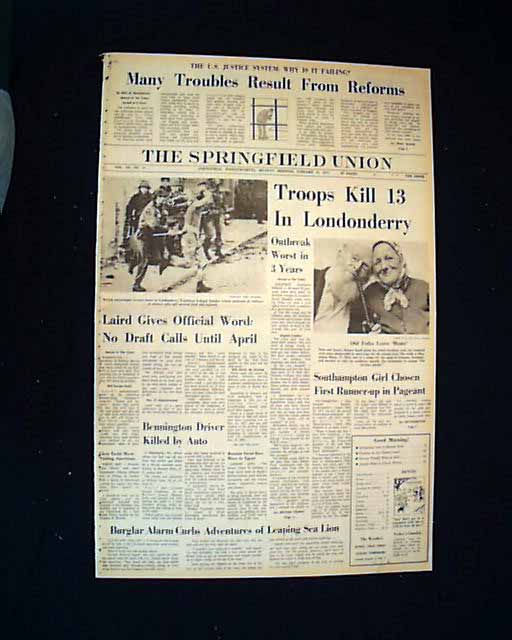
THE SPRINGFIELD UNION, Massachusetts, January 31, 1972.
* Bloody Sunday
* Derry, Northern Ireland
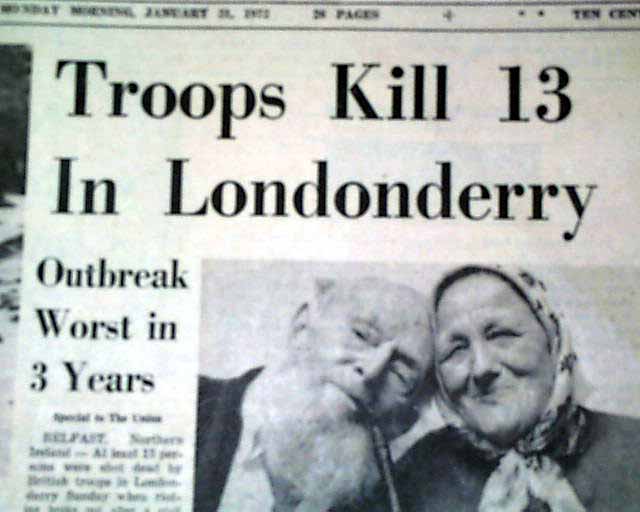
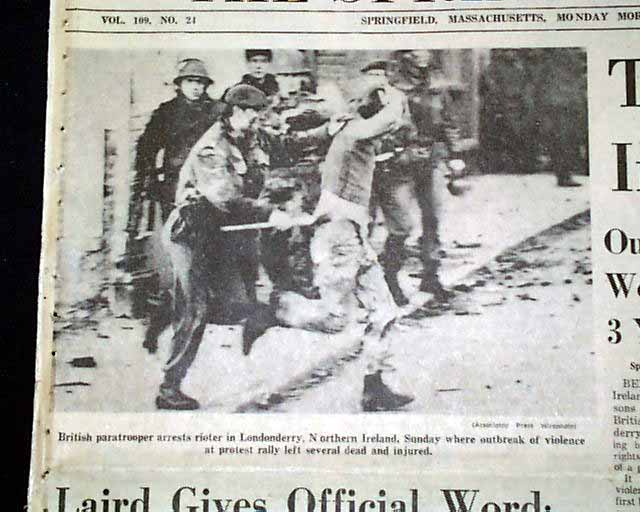
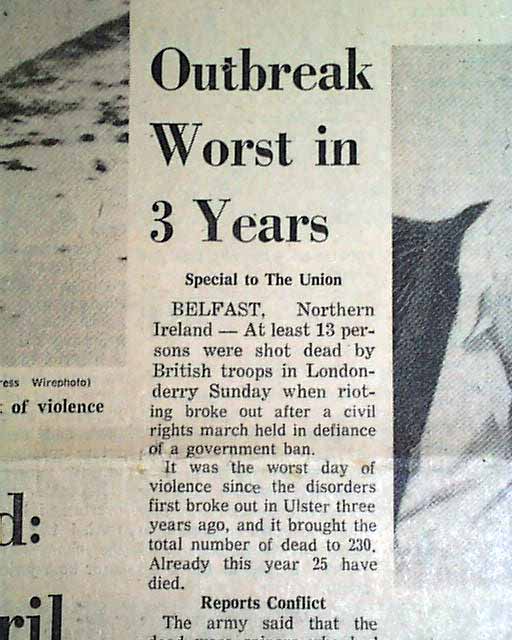
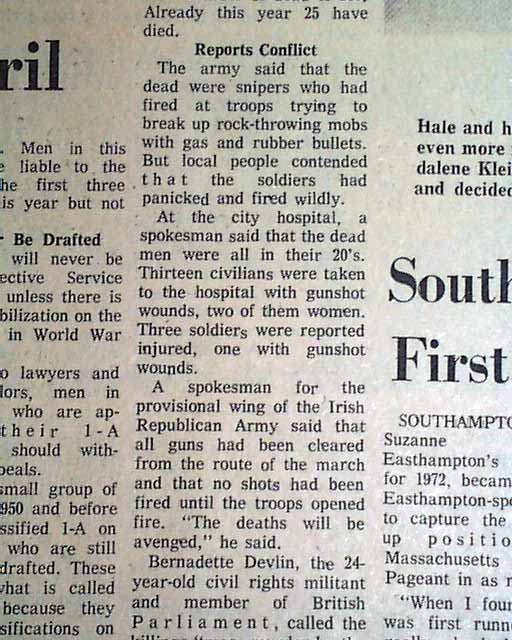
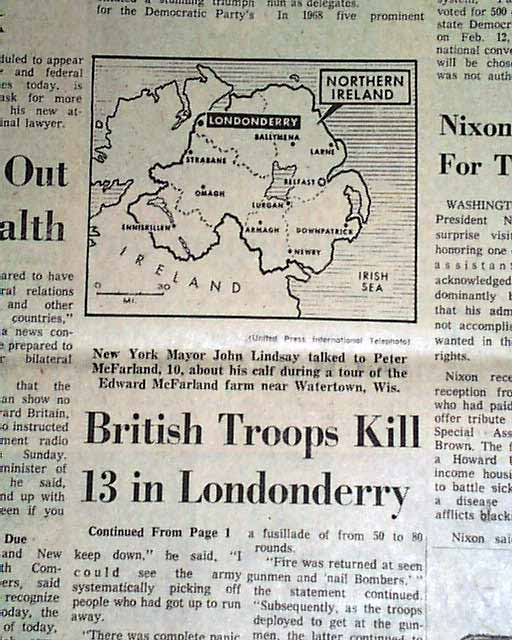
This 26 page newspaper has a two line, four column headline on the front page: "Troops Kill 13 in Londonberry" with subhead: "Outbreak Worst in 3 Years" and a four column related photo also on the front page. Other news of the day throughout. Small binding holes along the spine, otherwise in good condition.
Background Information: Bloody Sunday (Irish: Domhnach na Fola) is the term used to describe an incident in Derry, Northern Ireland, on 30 January, 1972 in which 26 civil rights protesters were shot by members of 1st Battalion of the British Parachute Regiment, during a Northern Ireland Civil Rights Association march in the Bogside area of the city. Thirteen people, six of whom were minors, died immediately, while the death of another person 4 months later has been attributed to the injuries he received on the day. Two protesters were injured when run down by army vehicles. Many witnesses including bystanders and journalists testify that all those shot were unarmed. Five of those wounded were shot in the back.
Two investigations have been held by the British Government:
1. The Widgery Tribunal, held in the immediate aftermath of the event, largely cleared the soldiers and British authorities of blame, but was criticized as a "whitewash" by many.
2. The Saville Inquiry, established in 1998 to look at the events again (chaired by Lord Saville of Newdigate), has yet to report.
The Provisional Irish Republican Army's (IRA) campaign against Northern Ireland being a part of the United Kingdom had begun in the two years prior to Bloody Sunday, but perceptions of the day boosted the status of and recruitment into the organization. Bloody Sunday remains among the most significant events in the recent troubles of Northern Ireland, arguably because it was carried out by the army and not paramilitaries, and in full public and press view. source: wikipedia
* Bloody Sunday
* Derry, Northern Ireland
This 26 page newspaper has a two line, four column headline on the front page: "Troops Kill 13 in Londonberry" with subhead: "Outbreak Worst in 3 Years" and a four column related photo also on the front page. Other news of the day throughout. Small binding holes along the spine, otherwise in good condition.
Background Information: Bloody Sunday (Irish: Domhnach na Fola) is the term used to describe an incident in Derry, Northern Ireland, on 30 January, 1972 in which 26 civil rights protesters were shot by members of 1st Battalion of the British Parachute Regiment, during a Northern Ireland Civil Rights Association march in the Bogside area of the city. Thirteen people, six of whom were minors, died immediately, while the death of another person 4 months later has been attributed to the injuries he received on the day. Two protesters were injured when run down by army vehicles. Many witnesses including bystanders and journalists testify that all those shot were unarmed. Five of those wounded were shot in the back.
Two investigations have been held by the British Government:
1. The Widgery Tribunal, held in the immediate aftermath of the event, largely cleared the soldiers and British authorities of blame, but was criticized as a "whitewash" by many.
2. The Saville Inquiry, established in 1998 to look at the events again (chaired by Lord Saville of Newdigate), has yet to report.
The Provisional Irish Republican Army's (IRA) campaign against Northern Ireland being a part of the United Kingdom had begun in the two years prior to Bloody Sunday, but perceptions of the day boosted the status of and recruitment into the organization. Bloody Sunday remains among the most significant events in the recent troubles of Northern Ireland, arguably because it was carried out by the army and not paramilitaries, and in full public and press view. source: wikipedia
Category: The 20th Century


